
Author: By Sailax Editorial Team | Last Updated: March 2026
Published on: March 26 2026
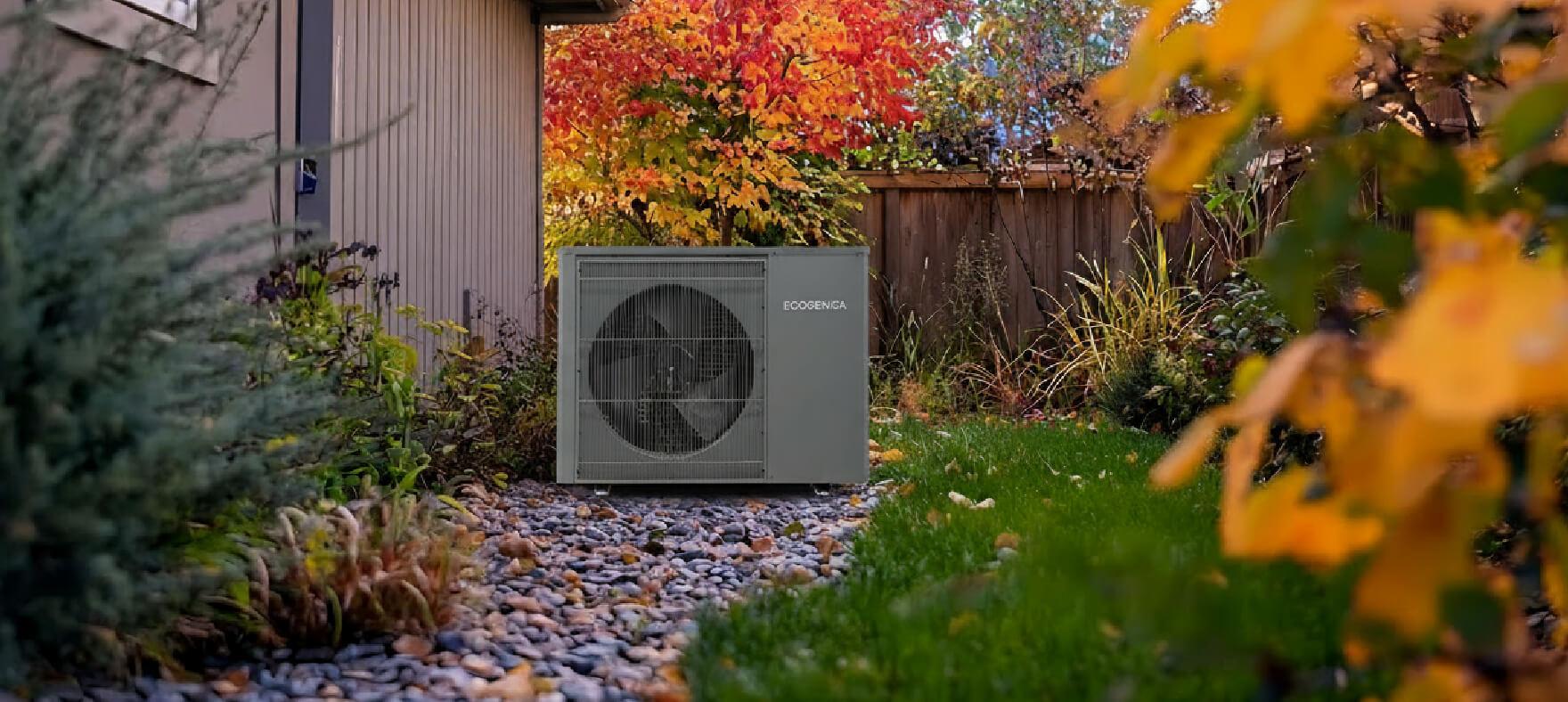
Air heat pumps work by extracting heat from outside air, compressing it, and transferring it indoors to heat UK homes efficiently. They use less energy than traditional systems, work even in cold weather, and are becoming a popular low-carbon heating solution.
Air heat pumps are becoming one of the most talked-about heating technologies in the UK due to rising energy costs and sustainability goals. But many homeowners and buyers still ask one key question - how do they actually work?
Understanding the working principle of heat pumps helps you evaluate efficiency, costs, and whether they are the right fit for your property.
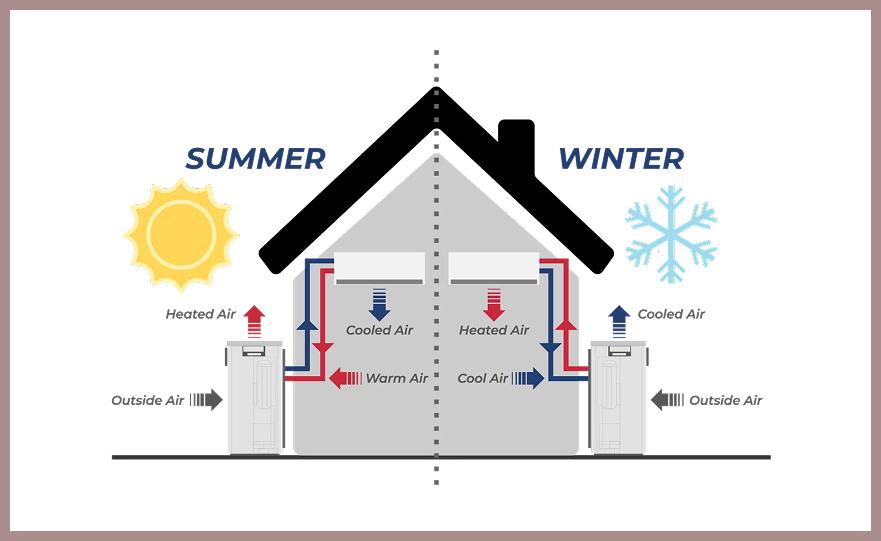
Air heat pumps work by extracting heat from outside air and transferring it inside using a refrigeration cycle. Even in cold UK weather, they can capture and amplify heat energy efficiently.
Instead of generating heat like boilers, they move heat, making them far more energy-efficient and environmentally friendly.
Air heat pumps follow a continuous cycle that absorbs, compresses, and transfers heat into your home.
This process ensures consistent and energy-efficient heating across UK properties.
Air heat pumps provide steady heating rather than quick bursts like traditional boilers.
The working principle of a heat pump is based on thermodynamics, where heat naturally moves from warmer to cooler areas, and the system amplifies this process.
It uses electricity to transfer heat rather than generate it, making it highly efficient.
Heat pumps rely on compression and expansion cycles to increase temperature and transfer energy effectively.
This process is similar to how refrigerators operate but in reverse.
This scientific process makes heat pumps one of the most efficient heating technologies available.
A heat pump diagram typically shows the flow of air, refrigerant, compressor, and heat exchanger components working together.
Understanding the diagram helps visualise how heat is captured and transferred.
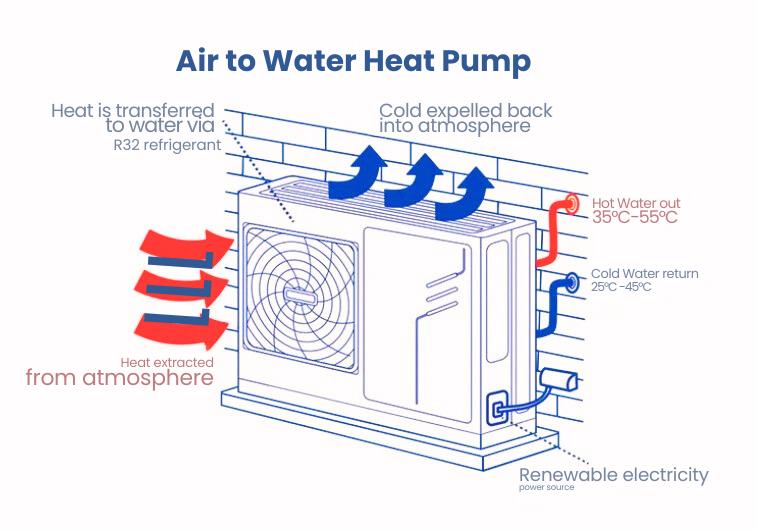
Each component plays a crucial role in ensuring efficient heat transfer and system performance.
Knowing these parts helps in understanding installation and maintenance.
A diagram simplifies the system and helps users understand its working visually.
Heat pumps and air conditioners share similar technology but serve different purposes in heating and cooling.
A heat pump can both heat and cool, while an air conditioner only cools.
| Feature | Heat Pump | Air Conditioner |
|---|---|---|
| Heating | Yes | No |
| Cooling | Yes | Yes |
| Efficiency | High | Moderate |
| UK Usage | Growing | Common |
Heat pumps are more versatile and energy-efficient, making them ideal for UK climates.
They provide year-round comfort and reduce reliance on separate systems.
Heat pumps are a smarter long-term solution for modern UK properties.
While heat pumps offer many benefits, they also come with certain limitations that buyers should consider.
Understanding these helps in making an informed decision.
Source: Ecogenica Outback product specifications
The main downsides are related to cost, installation, and property suitability.
However, these can be managed with proper planning.
Despite drawbacks, benefits often outweigh limitations in the long run.
Some users experience higher bills due to improper setup, insulation issues, or usage patterns.
Understanding these factors can help reduce costs.
Energy costs depend on efficiency, usage, and system configuration.
Optimising these factors improves performance and reduces expenses.
Optimisation and proper setup are key to achieving cost savings.
The 20-degree rule refers to maintaining a stable indoor temperature rather than frequently adjusting settings.
This improves efficiency and comfort.
Heat pumps work best when maintaining consistent temperatures rather than rapid heating changes.
This ensures optimal efficiency and lower energy usage.
Consistency is key to maximising heat pump efficiency.
Air heat pumps are increasingly seen as a future-proof heating solution in the UK.They offer efficiency, sustainability, and long-term savings.
Different property types and buyer profiles benefit differently from heat pumps.
Understanding suitability helps in decision-making.
Heat pumps are becoming a standard feature in future-ready UK homes.
| System | Efficiency | Carbon Emissions | Running Cost |
|---|---|---|---|
| Heat Pump | SCOP 4.91 at 35°C / 3.69 at 55°C | Low | Lower long-term |
| Gas Boiler | ~90% | High | Increasing |
Air heat pumps absorb heat from outside air, compress it to increase temperature, and transfer it indoors through radiators or underfloor systems, repeating the cycle continuously.
The biggest disadvantage is the high upfront installation cost, along with the need for good insulation and possible system upgrades.
Yes, heat pumps can work efficiently in temperatures as low as -15°C, making them suitable for UK winters.
High bills are usually caused by poor insulation, incorrect system sizing, or high electricity tariffs rather than the heat pump itself.
Yes, heat pumps are more versatile as they provide both heating and cooling, making them more efficient for UK homes.
Air heat pumps are a highly efficient and future-ready heating solution for UK homes and businesses. By understanding how they work and optimising their use, buyers can achieve significant energy savings and reduce their carbon footprint.
Copyright © 2026 Sailax Global Technologies Ltd